DOP 5: Delete One Part
- 4.4
- Rating
- 10.00M
- Installs
- Free
- Price

 Analysis by App-foxy
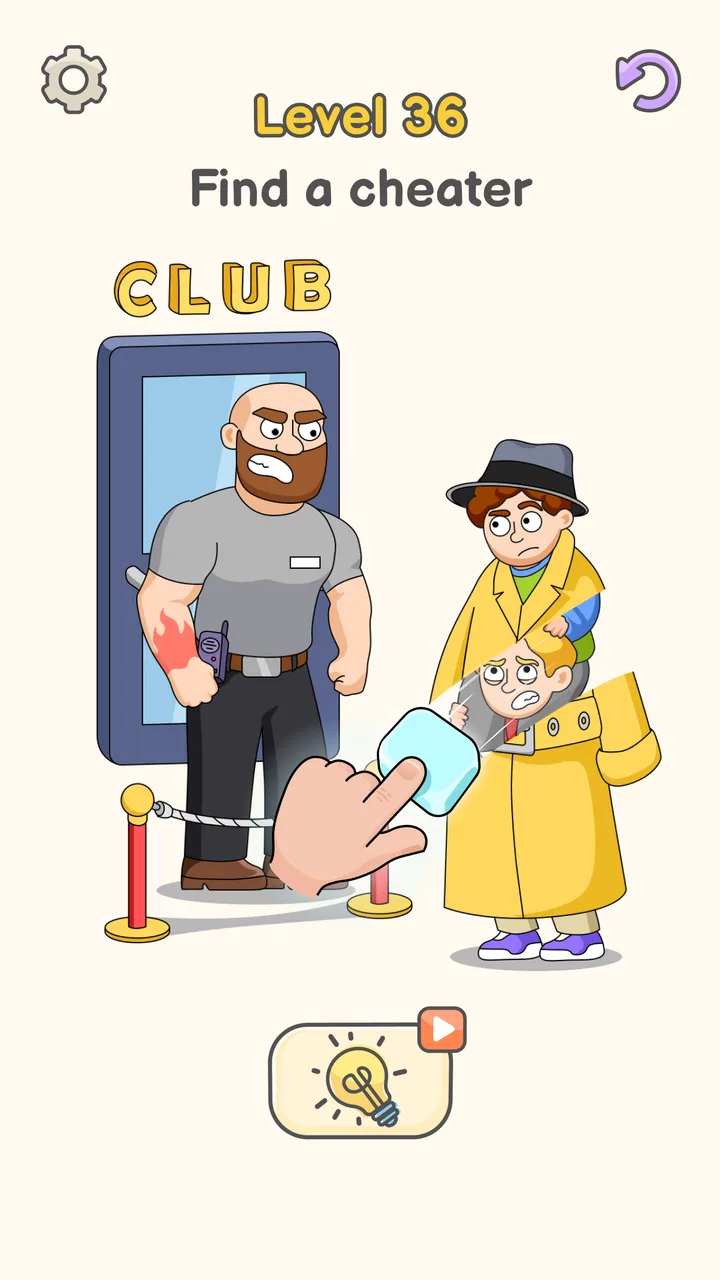
I went into DOP 5: Delete One Part expecting a light puzzle game, and that is exactly where it works best. The idea is simple: look at a picture, decide what does not belong, and erase one part to reveal the intended solution. The challenge is not fast reflexes or complicated controls. It is learning to question the obvious image in front of you.
That small action creates a surprisingly pleasant moment of discovery. I drag across an object, watch the scene respond, and either get the satisfying confirmation that I understood the joke or learn that I focused on the wrong detail. Then the puzzle clears, the next situation appears, and I am tempted to try just one more. As a free puzzle game from SayGames Ltd, it is designed for short bursts rather than long, demanding campaigns, and my experience matched that purpose.
How the delete-one-part idea feels in actual play
I find the appeal of the delete-one-part idea is that a swipe doubles as both an answer and a test of how I read the picture. When I’m unsure, I get more from checking what each possible erase would change than from sweeping across the scene at random; that turns a quick guess into a small exercise in interpretation. It also makes the game’s limits easier to judge, which leads naturally to how the current release fits into a casual puzzle routine.
You May Also Like

 Blood Strike: 2.5 Anniversary
Blood Strike’s Loadouts Turn Every Drop Into a Tactical Gamble
A close look at Blood Strike’s custom loadouts: how fast access to signature weapons reshapes its battle royale rhythm, rewards preparation, and narrows the gap between fights.

 Pandora - Music & Podcasts
Pandora’s Music Is Easy to Start, but Harder to Recover
Pandora’s strength is its low-effort path from a seed to a station. Its weak spot is how much confidence it asks you to place in connection, setup, and quiet recovery.

 8 Ball Pool
 Is Built on Rivalries, Rematches, and Routine
A close look at the rivalries, rematches, shared routines, and unanswered safety questions that turn a quick pool match into a persistent mobile community.

 Samsung Music
’s Quiet Strength Is Playing What You Already Own
Its reach comes less from spectacle than from dependable access to a personal library. That simplicity is both the app’s strongest retention engine and its ceiling.

 AccuWeather: Weather Radar
AccuWeather Review: A Quick, Clear Forecast for Everyday Decisions
For everyday plans, the best forecast is the one you can understand quickly. AccuWeather makes rain timing, radar, and local conditions easy to act on, with a few trade-offs.

 Hill Climb Racing
Why Hill Climb Racing Still Turns Crashes Into One More Run
A tiny car, a bumpy hill and one more upgrade: Hill Climb Racing keeps resurfacing because its simple chaos makes every near-miss feel personal.
More From Our News Desk



The first action is easy, but the observation matters
The opening interaction is friendly enough for almost anyone who has played a touchscreen game. I simply swipe over the part I want to remove. There is no complicated movement system to learn, no virtual character to guide, and no long tutorial standing between me and the first puzzle. That directness is important because the game’s real test begins immediately after the control is understood: what should I erase?
The drawings are built around visual assumptions. A scene may appear ordinary at first, but one detail changes its meaning. I found myself scanning from left to right, then checking the background and the edges before committing to a swipe. That habit is more useful than randomly rubbing the screen. The correct answer is often connected to the situation as a whole, not merely to the most noticeable object.
One practical tip is to treat the image like a small visual riddle rather than a coloring page. I first ask what the scene is trying to show, then look for the element that prevents that interpretation from making sense. This approach saves time and makes the successful erase feel earned. It also exposes the game’s main weakness: if the intended visual joke does not click for you, the puzzle can feel arbitrary rather than clever.
The touch interaction itself is uncomplicated, which makes the game suitable for one-handed play. I can pick it up while waiting for a coffee, during a short commute, or between other tasks without needing to remember a complicated control scheme. That convenience is a genuine strength, although it also means the game does not offer much depth through mechanics. The interest has to come from the individual scenes and the way they invite lateral thinking.
Feedback gives each puzzle its rhythm
The most important part of the loop is what happens after the swipe. A correct action produces immediate feedback, so I never have to wonder whether the game understood my gesture. That quick response creates a clean rhythm: inspect, erase, see the result, and move forward. When I choose correctly, the answer feels almost like a visual punchline.
When I choose incorrectly, the failed attempt is useful because it narrows the possibilities. I can look again without losing the entire session or feeling that I have made an irreversible mistake. This forgiving structure keeps the mood relaxed. The game encourages experimentation, but it does not turn every wrong guess into a serious setback.
That feedback also changes how I approach later scenes. At first I tend to erase the largest or strangest-looking object. After a few puzzles, I become more careful about small details and the relationship between foreground elements. The game gradually trains attention without announcing that it is doing so. I start checking expressions, positions, and visual contradictions instead of relying on size alone.
There is a trade-off here. Players who enjoy strict logic puzzles may find some answers too dependent on the artist’s intended interpretation. This is not a grid-based deduction game where every clue can be proven step by step. It is closer to visual problem solving with a playful twist. If you prefer puzzles with one fully transparent logical path, the usual number puzzles, word puzzles, or traditional match games may feel more satisfying.
The reward is understanding the scene, not mastering a system
The reward structure is modest but effective. Solving a puzzle gives me the pleasure of seeing the image make sense, followed by the invitation to continue. There is no need for a complicated collection system to make the central action enjoyable. The reward is the reveal itself: I remove the misleading piece and understand what the scene was hiding.
That makes the game especially approachable for people who want a low-pressure mental break. I would recommend it to someone who likes optical jokes, simple riddles, and picture-based challenges but does not want to study rules before playing. It can also work well for families sharing a phone, since the answer can be discussed aloud and the gesture is easy to demonstrate.
For younger players, the content rating is Teen, so I would still check whether the tone and individual scenes suit the person using it. The game’s easy controls should not be confused with a universal age recommendation. Adults looking for a few minutes of distraction will probably understand its appeal quickly, while players seeking a serious brain-training routine may outgrow the format.
A useful way to enjoy the rewards is to pause after a failed attempt instead of immediately sweeping across every object. I found that the game is more entertaining when I give myself a moment to predict the result. Random erasing can eventually produce progress, but it removes the small act of reasoning that gives each solution its character.
Why another session begins so easily
After a successful puzzle, the reset is almost frictionless. The completed image gives way to another challenge, and the same question returns in a new form: what single change will make this scene work? Because each round is self-contained, I do not need to remember a story, manage resources, or prepare for a difficult boss encounter. I can stop after one solved scene and return later without a large mental commitment.
This is where the game fits everyday use particularly well. Imagine sitting in a waiting room with only a few minutes available. I can open it, solve a puzzle or two, and put the phone away without feeling that I have abandoned a larger objective. On a longer break, the quick resets make it easy to continue until I decide I have had enough.
The same design can become repetitive if I play for too long in one sitting. The swipe is always based on the same basic action, so the variety must come from the pictures and the interpretations. I would not choose it for an evening when I want a deep progression system or a constantly expanding set of mechanics. Its strength is the short loop, and extending that loop for hours can expose its limits.
The reset also makes it convenient for casual sharing. If a friend is nearby, I can hand over the phone after a puzzle and let them inspect the next one. There is no complicated account setup or long explanation needed to get started. That social use is not the same as a multiplayer mode; it is simply the kind of game that invites someone else to guess along with you.
What the current release offers in practical terms
DOP 5: Delete One Part is listed as a free game in the puzzle category, with in-app purchases priced at $1.99 per item. That makes it easy to try without paying at the start, while the purchase model is worth keeping in mind if you prefer games with no optional spending at all. I would approach it as a free casual experience first and decide later whether any available purchase improves the way I want to play.
The game has a 4.5 average from around 56 thousand ratings, and it has passed 10 million installs. Those figures suggest that the simple erase-and-reveal format has reached a broad audience, but popularity does not remove the personal question of fit. The right reader for this game is someone who enjoys visual surprises and quick decisions, not necessarily someone who wants the most demanding puzzle design available.
The release date is June 7, 2023, and the current version is 1.1.37. It requires Android 8.0 or later, which is useful to check before downloading on an older phone. I appreciate that the basic concept remains easy to understand even when the individual puzzle requires more thought. The presentation does not ask me to learn a large rulebook before I can judge whether it belongs in my regular rotation.
One limitation I noticed in the overall design is that the game’s appeal depends heavily on accepting its intended answer. If I see a scene differently from the designer, the solution can feel less like deduction and more like guessing the author’s joke. That is not a problem for every player, but it is an important distinction from games where all information is numerical or formally structured.
Who should make it part of a casual puzzle rotation?
I think it is a good match for players who like visual riddles, quick touch controls, and the satisfaction of correcting a scene with one deliberate action. It is also a sensible option for people who often play in fragments. The short solve-reset cycle means I can enjoy it without reserving a full hour or worrying about losing progress in the middle of a complicated level.
It is less suitable for anyone who wants a story-driven adventure, competitive scoring, or a substantial sense of character development. It may also disappoint players who expect every answer to be logically unavoidable. In those cases, a traditional crossword, a number-based logic game, or a more structured match puzzle would probably provide a clearer long-term challenge.
I would also skip it when I am specifically looking for a calm game with no interpretive surprises. The best moments come from reconsidering what I see, but that can be mildly frustrating when the intended object is not obvious. The game rewards flexible thinking more than meticulous proof, and that difference should guide expectations before installing it.
My verdict on the complete action-feedback-reward-reset loop
The loop works because every part is quick and understandable. I inspect a scene, erase one part, receive immediate feedback, enjoy the reveal, and reset into a fresh visual question. That sequence gives me a clear reason to begin another session: the next image might contain a solution I can spot faster, or a trick that makes me rethink my first impression.
My favorite aspect is the way a tiny gesture can change the meaning of an entire picture. The game does not need complicated controls to create that effect. Its best puzzles make me feel observant rather than merely fast, and the occasional wrong guess is usually gentle enough to keep the mood moving.
My main reservation is equally clear: the formula can become familiar, and some solutions may feel subjective. I would not treat it as a replacement for a deep logic title. I would treat it as a pocket-sized visual puzzle collection for spare moments, shared guesses, and quick mental resets.
Overall, I recommend it if you want a free, approachable puzzle game that starts instantly and rewards curiosity more than technical skill. SayGames Ltd keeps the central interaction focused, and the substantial player response reflects how accessible the concept is. Just keep your expectations aligned with its purpose: this is a sequence of brief visual challenges, not an elaborate campaign. For the right kind of player, that simplicity is exactly why another session is so easy to start.
FAQs for DOP 5: Delete One Part
01What is DOP 5: Delete One Part about?
DOP 5: Delete One Part is a puzzle game where players solve challenges by erasing parts of the images presented to them. The game requires creativity and lateral thinking, as each level presents a unique scenario that must be solved by identifying and deleting the correct element. It's a fun way to test your problem-solving skills.
02Is DOP 5: Delete One Part free to play?
Yes, DOP 5: Delete One Part is free to download and play. However, like many mobile games, it offers in-app purchases and ads. Players can choose to buy hints or skip levels, but these are entirely optional and the game can be enjoyed without spending any money.
03What are the system requirements for DOP 5: Delete One Part?
The game is available for both Android and iOS devices. For Android, it requires version 5.0 and up, while iOS users will need iOS 10.0 or later. It's designed to run smoothly on most smartphones and tablets, ensuring a wide range of compatibility for users.
04Can I play DOP 5: Delete One Part offline?
Yes, DOP 5: Delete One Part can be played offline. This makes it a great option for passing time during commutes or in areas with limited internet connectivity. However, some features, such as purchasing hints or watching ads for rewards, will require an internet connection.
05Are there any accessibility features in DOP 5: Delete One Part?
The game offers intuitive touch controls that are easy to use. While it doesn’t have specific accessibility features like voice commands or screen readers, the simplicity of gameplay with its touch mechanics makes it accessible to a broad audience. Developers are encouraged to consider more accessibility options in future updates.
Pros
- Intuitive gameplay mechanics.
- Visually appealing graphics.
- Regular updates with new levels.
- Challenging and engaging puzzles.
- Offline play available.
Cons
- Ads can be intrusive.
- Limited hints without purchase.
- Some puzzles feel repetitive.
- No multiplayer mode.
- May drain battery quickly.

DOP 5: Delete One Part
Gallery